


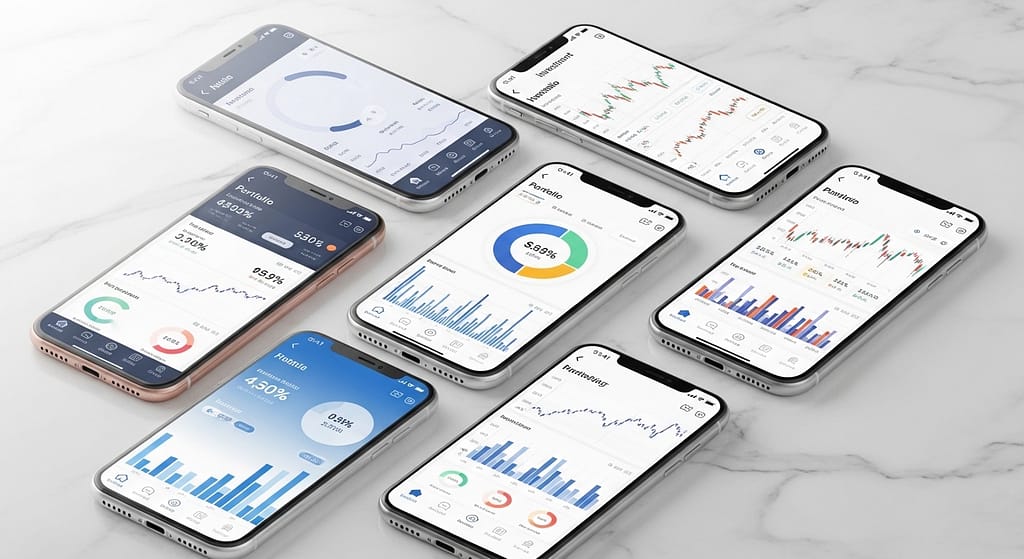
I did something slightly obsessive earlier this year. I opened accounts on seven different investment apps — funded each with a small amount — and used them properly for two months.
Not just downloaded and poked around. Actually invested. Actually navigated the interface. Actually tried to do what a beginner would do.
Here’s what I found.
What Makes an Investment App Good for Beginners
Before the reviews — here’s what I was looking for:
- No account minimums — I shouldn’t need thousands to open an account
- Commission-free investing — every dollar of fees is a dollar not compounding
- Fractional shares — I want to be able to buy any stock or fund regardless of share price
- Clear interface — if it takes 20 minutes to figure out how to buy something, that’s a fail
- Educational resources — does it help me understand what I’m doing?
- Trustworthy — is this a real company that will still exist in 10 years?
The 7 Apps — Honest Reviews
1. Fidelity — Best Overall, Not Even Close
I didn’t expect Fidelity to win. I expected it to be the boring, safe, older-person choice that technically works but feels outdated.
I was wrong. Fidelity in 2025 has a genuinely excellent mobile app, fractional shares from $1, zero commission trades, and — crucially — the ZERO fund series with literally 0% expense ratios. You can invest without paying a single penny in fees ever.
Add to that SIPC insurance, no account minimums, excellent customer service, and decades of stability — Fidelity is the answer for most beginners. Full stop.
2. Charles Schwab — Excellent Second Option
If Fidelity didn’t exist I’d be recommending Schwab enthusiastically. No minimums, fractional shares from $5, excellent index funds at rock-bottom fees, physical branch locations if you ever want in-person help. Slightly less polished mobile app than Fidelity but very capable.
3. Vanguard — Best for Pure Index Fund Investing
Vanguard invented the index fund. The funds themselves are exceptional — VOO, VTI, VXUS are industry benchmarks. The app however is not their strong suit. Functional but not beautiful. Best for people who plan to buy three funds and not think about it for 20 years.
4. Robinhood — Simple But Use Carefully
The interface is genuinely excellent. The cleanest, most intuitive of all seven. No minimums, fractional shares, commission-free.
My concern: the interface is designed to encourage frequent checking and trading. That’s the opposite of what most long-term investors should do. Use Robinhood to buy index funds and then close the app for a month. Don’t use the options trading or leverage features.
5. M1 Finance — Best for Automated Investing
M1 lets you build a ‘pie’ — a custom portfolio allocation — and then automatically invests and rebalances for you. Set up your pie once. Add money. M1 handles everything else. Excellent for people who want a set-and-forget approach without paying for a robo-advisor.
6. Betterment — Best If You Want Zero Decisions
You answer some questions about your goals and timeline. Betterment builds you a diversified portfolio and manages it automatically — rebalancing, tax optimization, everything. Costs 0.25% per year. For total beginners who find individual fund selection overwhelming, this is worth the fee.
7. Acorns — Best for Starting the Habit
Round up every purchase and invest the spare change automatically. A $3.75 coffee rounds up to $4.00, $0.25 goes to your investment account. It adds up — but slowly. The $3 monthly fee is proportionally high for very small balances.
Best use: start with Acorns to build the habit of investing. Once you’re comfortable, move to Fidelity for better economics.
My Final Recommendation
Open a Fidelity account. Open a Roth IRA if you’re eligible. Buy a total market index fund. Set up a monthly automatic investment of whatever you can manage.
That’s it. That’s the whole strategy that beats most professional fund managers over 20 years.
Fidelity vs Robinhood — which is actually better for beginners?
Fidelity. The 0% expense ratio funds at Fidelity are genuinely better economics than anything Robinhood offers. And Fidelity’s stability and customer service are in a different league.
You might also like: How to Invest Money for Beginners | How to Start Investing With $100 | Passive Income Ideas for Beginners | Best Side Hustles From Home 2025