

My weekly food shop crept up to £95 per week without me really noticing. £95. For one person.
I didn’t even eat that well. I was buying branded products out of habit, wasting food I’d forgotten about, and topping up mid-week because I hadn’t planned properly.
One month I decided to track every grocery purchase meticulously and actually work out what I was spending and why.
Within six weeks I’d cut it to £50 per week. Same nutritional quality. Actually less food waste. Here’s everything I changed.
The Biggest Savings Came From These Changes
1. Actually Meal Planning — Not Vaguely Planning
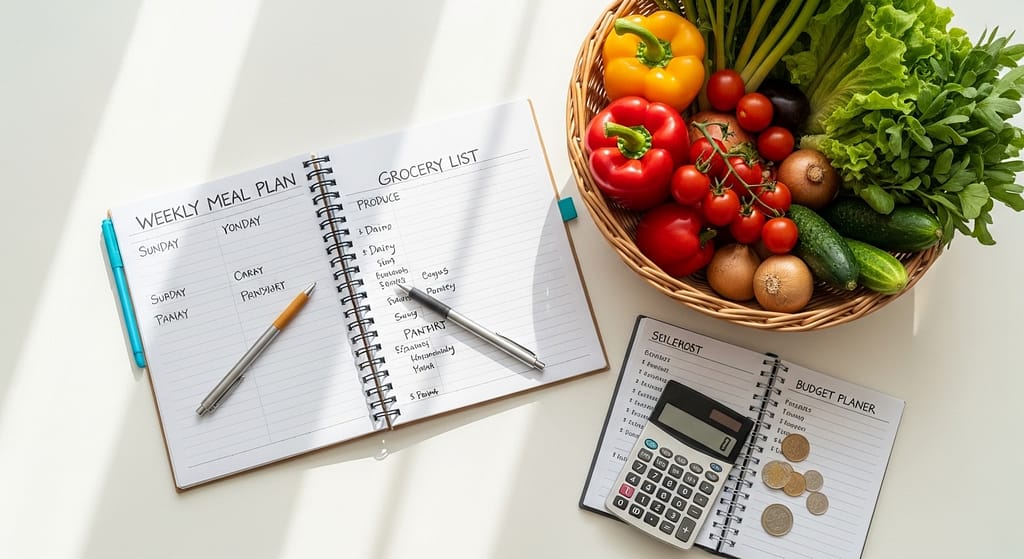
I mean properly sitting down on Sunday with a piece of paper, writing down seven dinners, five lunches, and breakfasts for the week, and then writing a precise shopping list from that plan.
Not ‘I’ll make something with chicken’. What dish, exactly. What ingredients do I need that I don’t already have.
This one change reduced my weekly shop by about £15 immediately. Less waste. No impulse buying. No mid-week top-ups.
2. Switched to Aldi for Staples
I was loyal to Tesco for years. Genuinely couldn’t tell you why. Habit, mostly.
I started doing my main shop at Aldi for all staples — pasta, rice, eggs, milk, bread, fruit, vegetables, cleaning products — and it was 20 to 30% cheaper for an equivalent basket. Which? Magazine’s regular comparisons consistently confirm this.
I still go to Tesco for specific branded products I genuinely prefer. But the majority of my shop is now Aldi.
3. Switched to Own-Brand for Everything I Couldn’t Tell Apart
I did a blind taste test on myself. Made the same meal twice — once with branded ingredients, once with Tesco Everyday Value or Aldi equivalents. For pasta, rice, tinned tomatoes, cleaning products, and most condiments? I literally couldn’t tell the difference.
4. Started Checking the Yellow Stickers
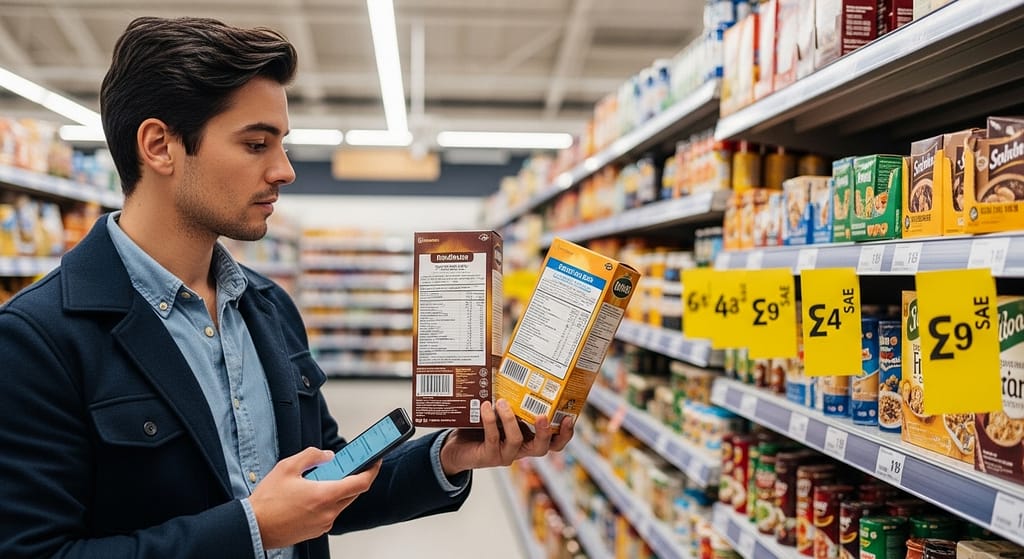
UK supermarkets mark down food nearing its use-by date — usually significantly. I started going to Tesco around 7pm on weekdays when the reductions usually appear. I’ve bought half-price salmon, reduced chicken, and marked-down vegetables that I froze immediately.
5. Price Per Unit Not Price Per Item
This one sounds obvious but I wasn’t doing it properly. A 500g jar of pasta sauce for £1.20 is not cheaper than a 680g jar for £1.50 if you look at the price per 100g. The shelf label always shows the price per unit — use it.
The App That Surprised Me
I expected Shopmium to be marginally useful at best. Free samples and tiny cashbacks.
I was wrong. In my first month I got £18 back through Shopmium and Checkout Smart combined — just on products I was already buying. It takes two minutes to scan a receipt. For £18 a month that’s a reasonable rate.
More Tricks That Helped
- Checked my fridge and cupboards before every shop — stopped buying duplicates of things I already had
- Bought a freezer bag — started batch cooking and freezing portions, dramatically reducing mid-week waste
- Used the Tesco Clubcard properly — accumulated and redeemed points on boosters for triple value on specific purchases
- Stopped buying pre-cut vegetables — the convenience premium is significant and the prep time is minimal
- Used the Too Good To Go app — collected £3 bags from local bakeries and restaurants worth £8 to £12 of food
Is Aldi really that much cheaper than Tesco and Sainsbury’s?
Yes, consistently. Which? research regularly shows Aldi and Lidl are 15 to 30% cheaper on a comparable basket of staples. The quality for own-brand products is comparable — sometimes better — to major supermarket own-brand equivalents.
How much can I realistically save on my UK food shop?
Most households that implement meal planning, switch some shopping to a discounter, and reduce waste save £30 to £60 per week. Over a year that’s £1,500 to £3,000 — from changing how you shop, not what you eat.
You might also like: How to Save Money on Energy Bills UK | Best Cashback Apps UK 2025 | Best Savings Accounts UK 2025 | Side Hustles UK 2025