
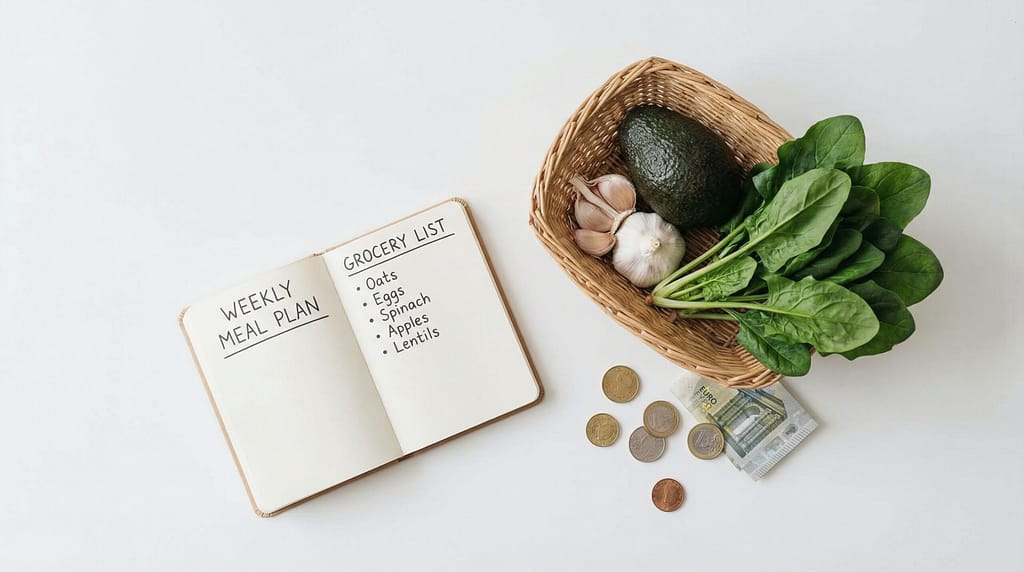


Grocery shopping for one person is surprisingly expensive. I cut my monthly food bill from $320 to $140 without eating worse. Here are the exact strategies that worked.
Category: Saving Money | Tags: save money on groceries, grocery tips for one person, food budget single person, cheap grocery shopping, meal planning for one, reduce food bill solo
Nobody tells you this when you start living alone: grocery shopping for one person is weirdly expensive.
You’d think buying less food would cost less money. But the reality is that most food is packaged for families. The cost-per-serving of everything is higher when you’re buying small quantities. And then half of it goes off before you can use it.
I was spending $320 a month feeding just myself and eating badly. Lots of convenience food. Too much food delivery. Regular trips to the shop for one or two things that somehow became $40 each time.
Then I got deliberate about it. Within two months my monthly food spend was $140 and the food was genuinely better.
The Specific Problem With Grocery Shopping for One
Before the solutions it helps to understand why solo grocery shopping is expensive by default.
- Bulk packages cost less per unit but more per purchase — and you often can’t use them before they spoil
- Fresh vegetables and fruit go off quickly when you’re only eating small amounts
- Single-serving convenience food is significantly more expensive per calorie than cooking from scratch
- Without a plan you buy random ingredients that don’t combine into complete meals, wasting both food and money
- The temptation to order delivery is higher when cooking for one feels like too much effort for too little payoff
The good news is that once you know the specific problems you can design specific solutions.
Strategy 1 — Plan Just 5 Dinners, Not 7
Meal planning for one person is the foundation of everything. But most advice tells you to plan every single meal every day, which feels exhausting.
Instead just plan 5 dinners per week. Leave two nights as flexible — leftovers, eating out occasionally, or a simple eggs and toast situation. Planning 5 specific dinners gives you an exact shopping list, eliminates the random top-up trips, and doesn’t feel overwhelming.
Write the 5 meals before you shop. Then write only what you need that you don’t already have. This one habit cut about $80 from my monthly food bill in the first month.
Strategy 2 — Cook in Batches and Eat it Twice
Cooking for one is time-inefficient. A meal that takes 30 minutes to make feeds you for 10 minutes. The solution is to make every cooking session count double.
Make a full 4-portion batch of everything. Eat it that evening. Put two portions in the fridge for the next two days. Freeze the fourth for next week. You’ve cooked once but fed yourself four times. The cost per serving of home-cooked batch meals is dramatically lower than anything else.
Strategy 3 — Master 6 Cheap Versatile Ingredients
My food budget dropped most dramatically when I stopped buying specific ingredients for specific meals and started building meals around 6 core cheap ingredients that combine in many different ways.
- Eggs — $3 to $4 for a dozen, work in breakfast, lunch, and dinner
- Dried lentils and beans — pennies per serving, filling, nutritious, last forever in a cupboard
- Frozen vegetables — same nutrition as fresh, no waste, cheaper, last months
- Tinned tomatoes — the base of dozens of different meals
- Rice and pasta — bulk staples that last indefinitely and work with almost anything
- Chicken thighs or drumsticks — significantly cheaper than breasts and more flavourful
Build your weekly meals primarily around these six. Add fresh items sparingly for variety. Your cost per meal drops dramatically.
Strategy 4 — Buy Frozen Instead of Fresh for Most Vegetables
Fresh vegetables are one of the biggest sources of waste and cost for solo grocery shoppers. You buy a bag of spinach, use a handful, and throw the rest away a week later.
Frozen vegetables are almost identical nutritionally to fresh, often cheaper, and you take out exactly what you need and put the rest back. No waste. For vegetables going into cooked dishes — soups, stir fries, curries, pasta sauces — frozen is genuinely better.
Strategy 5 — Reframe Leftovers as Free Future Meals
The biggest mindset shift that changed my food spending was starting to see leftovers not as boring repetition but as free future meals I don’t have to think about.
If I make a big pot of soup on Sunday that feeds me three times — I haven’t cooked three times. I’ve cooked once for free. The Tuesday soup costs me nothing in money or time. That reframe makes cooking bigger batches feel rewarding rather than like obligation.
Strategy 6 — Online Grocery Shopping for One Simple Reason
Shopping in-store when you’re hungry, tired, or just browsing leads to buying things you didn’t need. Online grocery shopping with a specific list eliminates virtually all impulse buying. You buy exactly what’s on your list and nothing else.
Most supermarkets now offer free click and collect. Use it for your main weekly shop. Only go in-store when you need something specific.
Strategy 7 — Use the Small Freezer You Probably Have
Single people tend to dramatically underuse their freezer. But for one-person households a freezer is a money-saving superpower.
- Freeze bread as soon as you buy it — toast it directly from frozen, never waste a loaf again
- Freeze half of any fresh meat you buy when you get home — use it within 2 weeks
- Freeze any leftover meals in single-portion containers — your own ready meals for tired evenings
- Buy marked-down food near its use-by date and freeze it immediately — significant savings
How Much Can a Single Person Realistically Spend on Food?
With deliberate effort most single adults can eat well on $150 to $200 per month in the US or £120 to £160 per month in the UK. That includes varied, nutritious meals — not just rice and beans every day.
The gap between what most people spend and what’s possible is almost always explained by convenience food, delivery services, and unplanned shopping rather than genuinely needing to spend more.
Quick Answers
What is a realistic food budget for one person?
In the US: $150 to $200 per month for one person eating well at home. In the UK: £120 to £160 per month. These figures assume mainly home cooking with minimal dining out or food delivery. Adding one or two meals out per week adds $50 to $100 depending on your choices.
Is it cheaper to cook for one or buy ready meals?
Home cooking is dramatically cheaper even for one person. A ready meal costs $3 to $6 and feeds you once. The ingredients to make the equivalent dish from scratch typically cost $1 to $2 per serving when you batch cook.
Related: How to Save $500 in 30 Days | How to Stop Impulse Buying | How to Budget When Paycheck to Paycheck | Meal Planning Tips